Unbury erased histories
Recover overlooked names, records, family lines, and community memory pushed outside the official story.
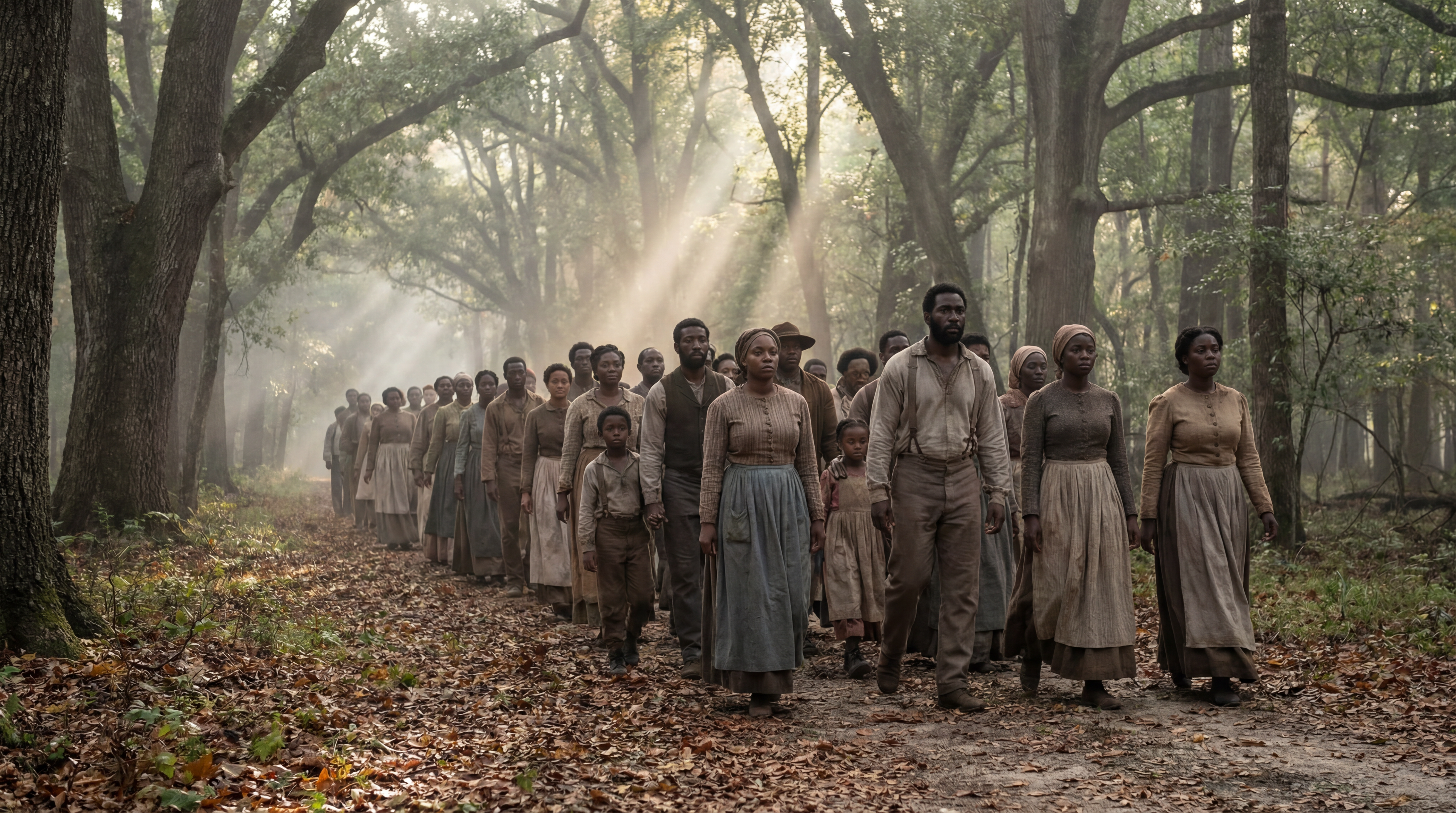
2BKnowledge is a living front page for the history of Black Americans formed through slavery, endurance, family continuity, labor, resistance, faith, institution-building, and nation-making. This space is built to recover memory, restore erased names, and make the story visible with force.
A visual threshold into the long history of Black American endurance, kinship, forced labor, resistance, and survival across generations.
This platform centers Black Americans whose lineages were forged through slavery and whose descendants shaped the United States at every level. The aim is not shallow inspiration. The aim is rigorous recovery: names, documents, local histories, inventions, churches, schools, gravesites, rebellions, professions, institutions, and everyday lives that carried a people forward under pressure.
Recover overlooked names, records, family lines, and community memory pushed outside the official story.
Move from captivity to resistance, Reconstruction, exclusion, migration, institution building, and continuity into the present.
Build a front page that feels alive through motion, exploration, visual gravity, and interactive pathways into deeper records.
The homepage now opens with a stronger historical spine so visitors can move through major eras without losing depth or emotional force.
From forced labor and family separation to spiritual endurance, craftsmanship, literacy, rebellion, and quiet resistance, this era shows how Black Americans were foundational to the nation while being denied personhood.
Schools, churches, businesses, civic leadership, and community institutions grew rapidly after emancipation, even as backlash, terror, legal exclusion, and stolen political possibility narrowed the path.
Black communities built newspapers, colleges, hospitals, professional networks, labor formations, artistic movements, and mass political action while confronting segregation and racial violence.
The work now is not only remembrance. It is restoration: reconnecting descendants, restoring names to the record, and making historical continuity undeniable to a wider public.
These featured blocks are designed as front-page gateways. Each can later open into full databases, essays, timelines, image archives, or document libraries.
Trace bondage, sabotage, escape, maroon survival, revolt, and the strategies people used to preserve dignity and kinship.
Show the people behind agriculture, transportation, medicine, skilled trades, domestic labor, science, and the physical making of the country.
Feature biographies, cemetery records, school rosters, death registers, newspaper mentions, church programs, and archival fragments.
Trace revolt, litigation, institution building, voter struggle, local organizing, and long-form resistance across regions and generations.
Version 2 adds a clearer archive layer so the homepage feels less like a brochure and more like the beginning of a serious knowledge system.
2BKnowledge can grow into a structured historical platform built around real source types, not just articles. That gives the site stronger authority and a path to scale.
The tone should remain solemn, powerful, and grounded. Not museum-flat. Not overloaded. It should feel like a living threshold into ancestral record, with cinematic weight and research seriousness.
Type a subject to preview how the front page can respond with stronger educational language and archive-ready summaries.
The homepage needs a language layer that carries dignity, weight, and clarity. These quote blocks help define that tone.
History is not just what power preserved. It is also what families carried, what communities remembered, and what descendants must now restore.
We do not begin with disappearance. We begin with people, labor, memory, resistance, faith, and a record that still speaks beneath the silence.
This final section invites researchers, educators, descendants, and community partners into the work of historical restoration.
Build lesson paths, source collections, archival pages, and curated historical modules that move beyond surface recognition into documented depth.
Create space for descendants to recover names, preserve oral histories, reconnect local memory, and restore overlooked people to the larger American record.